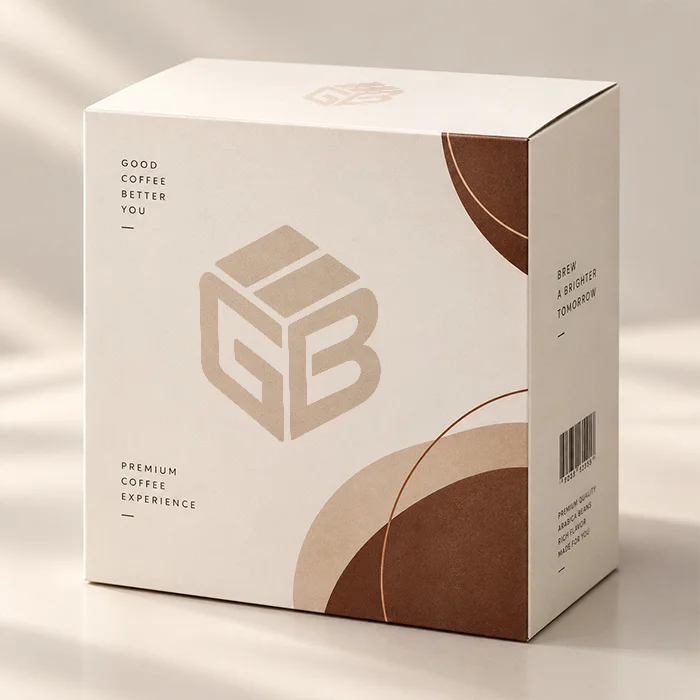
Ordering packaging in bulk requires more than choosing a box and adding a logo. The dimensions, structure, artwork, and packing process all need to work together. custom tuck end boxes wholesale give businesses an opportunity to develop a consistent packaging format around their products and ordering needs.
The starting point is specification. Before comparing prices, establish exactly what the box must hold, how it will be assembled, and what information it needs to carry. A clear brief makes it easier to evaluate samples and compare quotations on equal terms.
Measure the product in the condition in which it will be packed. Include any inner wrapping, accessories, instructions, or protective components.
If several products will use the same box, assess each arrangement separately. A shared format should work for every item assigned to it rather than simply accommodate the largest product.
A useful packaging brief should include:
The product’s dimensions and packed weight
The number of items per box
Any inserts or inner packaging
The preferred opening and closure arrangement
Branding and labeling requirements
Expected order quantities and storage space
These details provide a practical foundation before structural design and artwork begin.
Ask the supplier to show the proposed closure arrangement on a drawing and an assembled sample. Confirm where the opening flaps sit and how they interact with the artwork.
If comparing straight tuck and reverse tuck options, review both against the actual product and packing workflow. Do not choose a configuration from its name alone.
Check which panel the customer will see first and how the box will be opened. The preferred format should make sense for filling, display, and everyday handling.
Keep the approved structural drawing with the final order specification.
Confirm whether quoted measurements refer to the internal or external dimensions of the finished box. Account for board thickness, folds, and any insert occupying space inside.
The product should fit without forcing the panels outward or making the tuck flaps difficult to close. Leave enough access for the customer to remove the contents comfortably.
Avoid unnecessary empty space unless it serves a clear purpose. If additional room is needed for presentation, plan how the product will remain positioned.
Test a physical sample using the complete contents before approving the size.
Ask the supplier to specify the proposed board, printing, coatings, adhesives, and any additional components.
Discuss the product’s weight, shape, storage conditions, and handling requirements. Material selection should follow the actual application rather than a general preference for a particular appearance.
If the contents require direct-contact suitability or another specialized characteristic, request information relevant to the finished construction.
Do not treat two boxes with similar artwork as equivalent without comparing their material specifications.
Design the printed layout using the supplier’s approved template. Check the position of folds, tuck flaps, joining areas, and any sections that will be hidden after assembly.
Place the main logo and product name where they remain clear on the finished box. Keep important lettering away from creases and panel edges.
Review every panel in its correct orientation. Text that appears balanced on a flat file may sit awkwardly once the box is folded.
Approve the artwork on an assembled sample whenever possible, especially when graphics continue across several panels.
Establish a clear hierarchy between the brand name, product identifier, variant, and supporting details.
Reserve space for information required for the particular product and intended market. Have applicable labeling requirements and claims reviewed before the artwork is finalized.
If batch details, barcodes, or other variable information will be added later, define suitable areas for them. Check that these additions do not obscure essential text.
Do not shrink important wording simply to preserve decorative space. The box should communicate clearly as well as look coordinated.
Choose decorative treatments according to the brand’s visual direction. A restrained design may need only clear printing and a well-positioned logo.
If considering foil, embossing, textured surfaces, or other finishes, request representative samples. Review their appearance alongside the proposed board and printed colors.
Inspect folds, corners, and small lettering. Confirm that the finish does not interfere with readability, assembly, or closure.
Keep environmental statements specific to documented characteristics of the finished package rather than its color or texture.
Ask the people responsible for fulfillment to assemble and fill sample boxes using the normal workflow.
Check how easily the cartons open into shape, how the product is inserted, and whether the tuck flaps close neatly. Include all inserts, wrapping, labels, and cards used in the final process.
Look for steps that require repeated adjustment or make inspection difficult. If several variants share similar packaging, confirm that staff can distinguish them quickly.
Record the approved packing sequence so future production follows the same arrangement.
A useful price comparison starts with matching specifications. Confirm that each quotation covers the same dimensions, board, printing, finishes, and included components.
Clarify whether the quoted price includes:
Structural sampling and printed proofs
Artwork preparation or setup charges
Inserts and additional packaging components
Packing arrangements for the empty boxes
Delivery and other applicable charges
Repeat-order terms
Review the complete order cost rather than the unit price alone. A lower figure is not a meaningful comparison if the underlying specifications differ.
Plan the order around expected usage, available storage, and the likelihood of product or artwork changes.
Consider whether the packaging includes seasonal messages, dated information, or details that may need updating. Avoid committing to more printed stock than the business can reasonably use.
Ask how the boxes will be supplied and what storage conditions the supplier recommends. Include the space needed for the delivery packaging in the planning process.
If repeat orders are expected, keep the approved artwork version and construction details together for easy reference.
Before authorizing a wholesale run, compare the physical sample with the artwork proof and written specification.
Confirm dimensions, product fit, flap arrangement, spelling, panel orientation, and the placement of variable information. Resolve any differences before production begins.
Assess shipping protection separately if the retail box will travel inside another package. A neat tuck end closure should not automatically be treated as a complete transport solution.

This post has been authored and published by one of our premium contributors, who are experts in their fields. They bring high-quality, well-researched content that adds significant value to our platform.





Paris in France is your trusted source for Paris travel guides, cultural insights, attractions, lifestyle articles, and local experiences. Explore the beauty and charm of Paris with us.