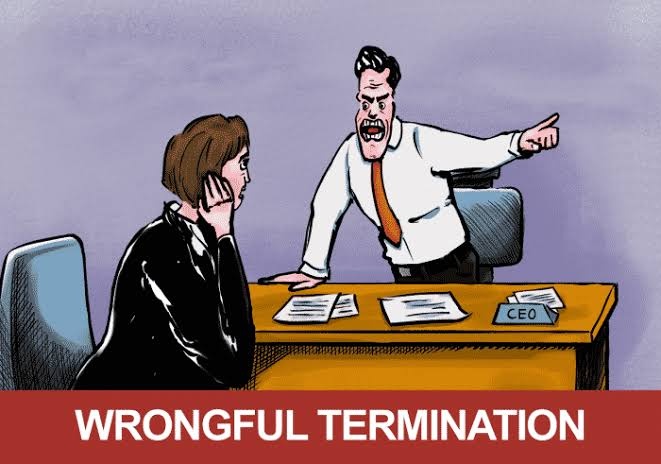
Employment decisions can have major consequences for both workers and employers. While businesses generally have broad authority to manage their workforce, federal employment laws place important limits on termination decisions. Understanding those boundaries can help employees recognize potential problems and help employers create fair, consistent workplace practices.
Not every unfair or unexpected firing is illegal. In many U.S. workplaces, employment is generally at will, meaning an employer may terminate an employee for many reasons, subject to applicable legal restrictions. However, an employer cannot base a termination decision on a legally protected characteristic or retaliate against someone for exercising certain workplace rights.
The Equal Employment Opportunity Commission (EEOC) identifies several protected characteristics under federal law, including race, color, religion, sex, national origin, age 40 or older, disability, and genetic information. Federal law also protects workers against retaliation for certain protected activities.
This distinction is important because a termination may appear routine on the surface while the surrounding circumstances raise legal concerns.
Some of the most useful wrongful termination examples involve situations where the stated reason for dismissal may not match the underlying circumstances.
For example, an employee might report sexual harassment to a supervisor and then suddenly lose their job. The timing alone does not automatically establish unlawful retaliation, but a close connection between the complaint and termination may warrant closer examination. The EEOC recognizes reporting discrimination or harassment as protected activity.
Other examples may include:
These situations require a review of the facts rather than assumptions about what happened.
Retaliation occurs when an employer takes adverse action because an employee engaged in legally protected activity. Protected activity can include filing or participating in a discrimination complaint, reporting harassment, opposing discriminatory conduct, or requesting certain accommodations.
Importantly, protected activity does not give an employee immunity from legitimate discipline. An employer may still terminate a worker for legitimate, nondiscriminatory reasons that are unrelated to the protected activity.
The key issue is often motivation. Investigators or courts may examine what happened before and after the complaint, whether policies were applied consistently, and whether the employer's stated explanation is supported by evidence.
Federal law prohibits employers from using protected characteristics as a basis for employment decisions, including firing and layoff decisions. The EEOC specifically warns employers against basing discipline or discharge on race, color, religion, sex, national origin, age, disability, or genetic information.
Consider a situation where two employees commit comparable violations but only one receives termination. If the difference in treatment is connected to a protected characteristic, the circumstances may require investigation.
Similarly, selecting older workers for layoffs solely because of their age can create legal concerns. Employers should rely on legitimate, documented business criteria rather than stereotypes or assumptions about an employee's capabilities.
Termination does not always happen through a formal firing. In some circumstances, an employee may argue that working conditions became so intolerable that resignation was effectively forced.
The EEOC recognizes constructive discharge as a potentially discriminatory employment practice when an employer creates conditions so intolerable that a reasonable person would not be expected to remain.
Examples could include severe harassment, discriminatory treatment, or deliberate workplace actions designed to pressure an employee into resigning. However, ordinary workplace dissatisfaction or a difficult manager does not automatically establish constructive discharge.
The specific facts and applicable law matter.
Employment disputes often depend on documentation. Employees and employers should preserve relevant records that can help establish what happened and why a decision was made.
Useful evidence may include:
A clear timeline can also be valuable. For example, documenting when an employee made a complaint, when management responded, and when termination occurred may help establish the sequence of events.
Employers can reduce legal risk by applying workplace policies consistently and documenting legitimate reasons for disciplinary decisions. The EEOC recommends that employers ensure termination decisions are not based on protected characteristics or retaliation and that disciplinary decisions generally remain consistent with established policies.
Managers should also understand that informal comments can become relevant evidence. Statements about an employee's age, disability, pregnancy, religion, race, or other protected characteristics may create concerns if they appear connected to an employment decision.
Consistent documentation, objective performance standards, and appropriate internal investigations can help organizations make better decisions.
The legality of a termination rarely depends on the termination notice alone. The surrounding facts may provide important context. Decision-makers may need to examine the employee's work history, disciplinary record, communications, timing, comparable employees, stated reasons, and available documentation.
For this reason, wrongful termination examples should be viewed as general illustrations rather than automatic proof that a particular firing was unlawful. Employment law is fact-specific, and federal, state, and local requirements can differ.
A careful review of the complete employment record can help identify whether a termination was supported by a legitimate reason or whether additional legal questions deserve attention. In a changing workplace, informed documentation and consistent employment practices remain essential for protecting both employee rights and organizational interests.

This post has been authored and published by one of our premium contributors, who are experts in their fields. They bring high-quality, well-researched content that adds significant value to our platform.












Paris in France is your trusted source for Paris travel guides, cultural insights, attractions, lifestyle articles, and local experiences. Explore the beauty and charm of Paris with us.